INTERVIEW: Operating in Africa, a Latvian company gains accessfor the first time to World Bankfinancing guarantees
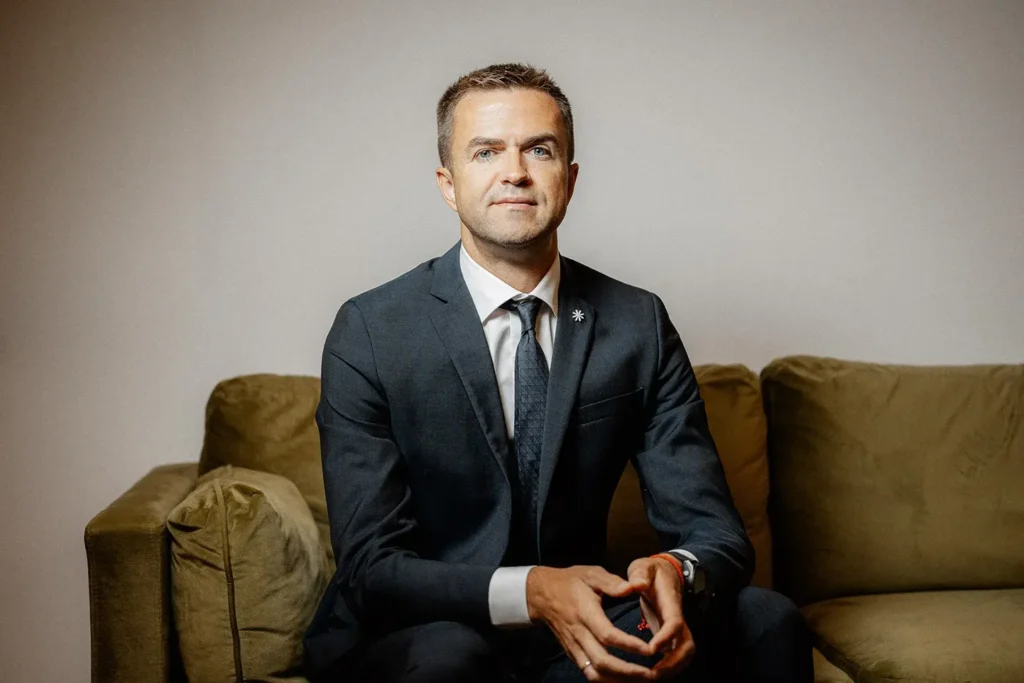
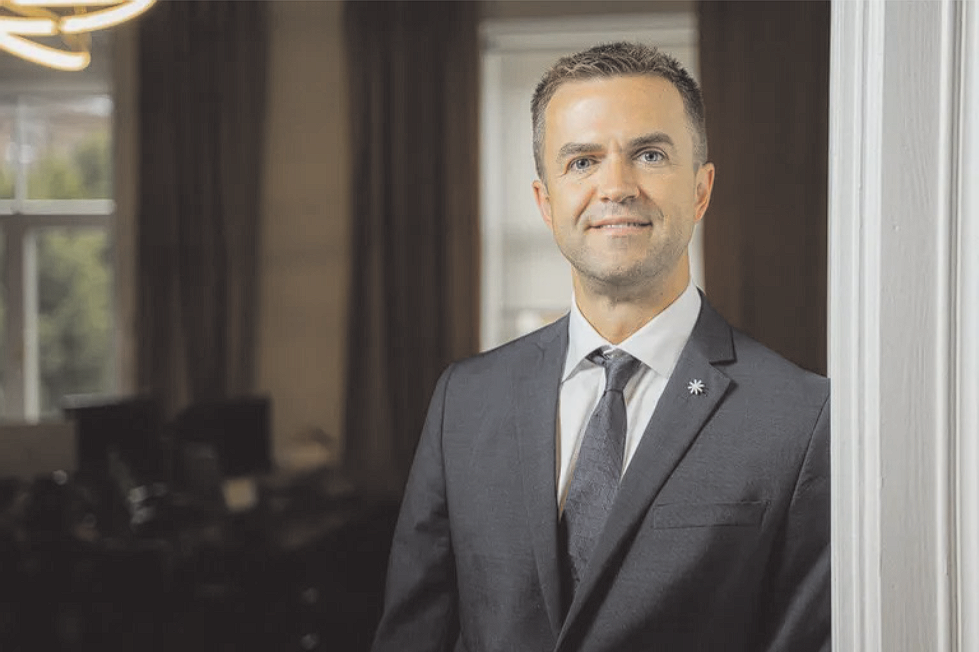
We often hear that Latvia lacks its own “Nokia”, a company that, as inFinland’s case, once rapidly boosted the nation’s economic value. It issaid that our economy stagnates because our entrepreneurs lackambition. Yet, there are Latvian companies with a truly global outlook.One such company is LIONPRO, which is among Europe’s leaders in thetrade of processed animal proteins and stands out as the first Latvianenterprise to gain access to World Bank financial support.The company’s Chairman of the Board, Jānis Kuļikovskis, shareshowthe business idea was born and what it means to operate in markets thatare often very unfamiliar to Latvian businesses.
Your company’s business dates back to the 1990s. How did the idea forits creation come about ?
I’m not the author of this idea – the person behind it is my mother. In 1994,she started working for a Swedish company’s representative office. Thatcompany helped Swedish manufacturers distribute their products in the Balticsand the former Soviet bloc countries. Among these manufacturers were notonly food producers but also companies making animal feed.My mother began cooperating with these producers and distributing theirproducts across the Baltic States.
Over time, some of them came to her with an encouraging sugges-tion: “Why work for someone else? You could establish your owncompany – we’ll support you.”
My mother began cooperating with these producers and distributing theirproducts across the Baltic States. Over time, some of them came to her with anencouraging suggestion: “Why work for someone else? You could establishyour own company – we’ll support you.” She did exactly that and startedfocusing on trading animal feed ingredients, offering Scandinavian products inthe Baltics, Belarus, and Ukraine.
Around the early 2000s, just after finishing university, I also joined thebusiness. It was around 2007-2008 that I became more deeply involved, with afocus not on the previously mentioned markets, but on other world regions.My biggest discovery was the Asian market. At that time, everyone understoodthat it was a region with enormous potential – both for buying and selling.
In the context from North to South America, Europe, andAfrica, we can see that Europe is producing less and less, whilemore production is shifting towards Africa. A similar trend isalso happening in Asia.
This movement largely aligns with our areas of operation – in Southeast Asia,Africa, and Latin America. Our focus is on developing countries, and in some ofthem, we actively contribute to building the animal feed production sector.
Some of these countries are still at a very early stage of development. There, wenot only establish infrastructure that allows us to offer products at competitiveprices, but we also bring in knowledge – training local farmers on how toimprove their practices, ultimately helping to enhance food availability in these regions.
In Africa, our focus is on the sub-Saharan region, where we often develop theentire infrastructure – from the initial supply chain to the end consumer.
Could you tell us more about the essence of your business?
The products we work with are animal feed ingredients. Our main product isactually a by-product of the recycling process. For example, one of the stages inmeat production involves slaughterhouses and meat processing plants. After ananimal is raised, it goes to the slaughterhouse, where the meat is separated.The parts that humans don’t consume – bones, legs, heads – are sent tospecialized rendering plants, where two main products are obtained: processedanimal proteins and animal fats.Animal fats are almost entirely directed toward biodiesel production, while theother component – processed animal proteins – serves as a high-quality proteinsource for animal feed.
Our business specializes precisely in this segment of processed animal proteins,where we are among the largest companies in Europe. At present, we areapproaching 20% of the total European Union exports in this product category.
How large is your company’s annual turnover?
Last year, our turnover was around 60 million US dollars, or approximately 57million euros. This year, we expect to reach between 80 and 100 million. Andthat’s solely from the niche product segment I mentioned earlier.However, as I noted, we are now building infrastructure to expand our portfolio,including other products such as corn, soy, and various grain by-products used inanimal feed production.
Your business is also connected to the African region, which is known tobe socially and politically unstable, including areas affected by theactivities of the so-called Islamic State and other fundamentalist groups.How predictable is it to develop business in such a region? What shouldLatvian companies be prepared for if they wish to start doing businessthere?
We avoid taking on very high risks that could be associated with the so-calledIslamic State or terrorism. In the countries where we have our representativeoffices and warehouses, such risks currently do not exist.
We also have no plans to enter countries where these risks arepresent, although we do not exclude the possibility of serving clientsfrom those regions through neighboring
The greatest risk we face is political instability. Whenever we plan to enter a newmarket, we carefully assess the political situation there – down to details such aswhen the last parliamentary or presidential elections took place.
From what you’re saying, it seems that you can also help promote exportsfrom certain countries. For example, while working in Nigeria, can youalso supply clients in countries such as Niger or Mali, where the politicalsituation is more complex?
Exactly. That is our ultimate goal – to build infrastructure that allows us not onlyto import, but also to export. This process is already underway. We have similarcompanies in Southeast Asia, and we are now actively looking for products witha clear idea of what we want to export from Africa to Asia.
When it comes to Africa, it’s important to note that the continent hastraditionally been a major importer of various finished goods. In contrast,our approach in Africa focuses on importing or locally sourcing rawmaterials to support and develop local production.
How does the unpredictability of the global economy affect your business -including the impact of the increased import tariffs introduced by the UnitedStates?
When it comes to import tariffs, the news is full of stories about trade warsbetween the major Western powers. However, we mainly operate in parts of theworld where U.S. tariffs have little to no direct impact. For example, Zambiadoesn’t export much to the United States – and vice versa. The Western worldstill tends to view Africa as a warehouse of raw materials.In contrast, Southeast Asia is more affected. We operate in Vietnam andThailand, where trade with the U.S. is quite active, so the existence of importtariffs carries greater significance.
That said, given the scale and flexibility of our operations, we are dynamicenough to adjust – deciding whether to ship goods from Europe to Asia, Brazil toAsia, or Africa to Asia, and vice versa.
Africa is often considered the fastest-growing region of the comingdecades. Do you see even broader business opportunities there than youhave at present? And do you believe that other Latvian companies couldalso develop their operations in that region?
Absolutely. That’s also one of our goals – to share more widely what we’re doing and to encourage others. Back in the 1990s, there were probably Germans wholooked at Latvia and thought they would never set foot here. Yet for us, livinghere, it didn’t feel like things were that bad. Of course, there were certainbusiness culture peculiarities – protection schemes, local “businessmen” – butwe knew how to exist, live, and grow within that environment.
I wouldn’t want to dramatize or in any way diminish the entire continent, but insome respects, there are similarities.
We don’t see Africa as some kind of “wild continent” – we understandthat each country has its own specifics, yet at the same time,treme-dous opportunities.
The population there is growing rapidly, and so is their prosperity. Of course,their well-being is rising from a very low base, so in absolute terms, the numbersmay still seem small – but, for example, a 10% increase in the consumption of agiven product in one of those countries means a very sharp rise in absolutevolumes.
We started by bringing in raw materials for production that are not locallyavailable, but now we’re looking at how to deliver and mix certain inputs on-site,performing pre-processing and producing semi-finished products. We would stillneed to develop a few more production stages, and then we could produceanimal feed locally.
At the moment, we still lack some resources to fully bring these processes to life,but the potential for production development is there, and the market remainsunsaturated. To put it simply – it’s like being in a forest full of mushrooms,where no one else dares to enter.
We want to encourage other entrepreneurs – come, the opportunities are there!Especially for those from our region. We carry a unique business culture andhistorical experience, having not been born in the easiest of times.
The opportunity to respond more adequately to everything happeningthere?
That’s right. In Africa, you simply shouldn’t be out alone on the streets at night.Twenty years ago, everyone here knew the same rule – you just didn’t do that.For a German or a Frenchman, this might be harder to “digest.”
It’s similar in the business environment. Let’s be honest – at times, we stillencounter situations involving raiding or extortion from certain stateinstitutions. Our entrepreneurs have faced similar circumstances in the past, sowe understand that if something doesn’t work as it should, there’s a reasonbehind it. We recognize it immediately, rather than going to officials andlistening to a bunch of naïve explanations.
I’m not saying we support or justify corruption in any way. What I mean is thatwe’re able to react much faster than entrepreneurs from countries where thebusiness environment has always been very orderly.
Would you encourage other Latvian companies to expand into Africa aswell? Which of the continent’s countries currently have the best develop-ment potential and are at the same time relatively politically stable?
I would definitely encourage others to do so. A large part of the countries thereare agrarian – focused on agriculture. They have forests, grain farming, andlivestock production, just like we do in Latvia. We have the knowledge andexpertise here that can be applied there.
Speaking of specific regions, East Africa – particularly Kenya and Tanzania – is very attractive. These countries are more politically and economically balanced.At the same time, this stability also attracts many other players.
As a starting point, I would definitely recommend East Africa. It offers a saferenvironment where success is more likely – and once you’ve “got a taste for it,”you can move on to countries with faster growth potential. Of course, where thereis greater growth potential, there are also higher political risks.
What are your main sales markets?
In Africa, our largest markets are Kenya and Nigeria. Nigeria is enormous, and inthe future, it could become the fourth or fifth most populous country in theworld. The potential there is tremendous – the numbers alone make it clear thatthis is a market worth entering.
As for other regions, in Southeast Asia our main markets are Vietnam, Cambodia,Thailand, and Indonesia. These can no longer truly be called developing countries- they are nations with huge populations and rapidly expanding production.The Southeast Asian region is developing very quickly, as manufacturing in Chinahas become increasingly expensive. We already see that production is shiftingsouthwards, and we are preparing to enter these markets in a timely way.
Let’s talk about money. Your company has also received financing from theWorld Bank. What is the model behind it, and how does it differ from othertypes of financing?
We have signed an investment guarantee agreement with the World Bank. Thisdoesn’t mean that the World Bank has given us money directly – rather, it hasprovided something comparable to an insurance policy. In essence, theinstitution is saying: “LIONPRO Group has invested in Africa, and if the companysuffers financial losses due to political risks, war, or expropriation, we will coveror prevent those consequences.”
What does this mean for us? It gives us the ability to go to any lender and say:“You can safely provide us with financing – if you believe in our business modeland ability to manage operations, all other risks are covered by the World Bank.”
Does this mean you can issue bonds at a lower interest rate?
Yes, exactly. We can now tell all our investors that all the risks typicallyassociated with operating in Africa are essentially eliminated – because the mostreputable financial institution in the world has stated that it will takeresponsibility for managing them.
Is the World Bank financing or guarantee you mentioned focused on aspecific country, or does it cover your operations as a whole?
The current agreement applies to our investments in Kenya.
This was very important, as the World Bank does not grant suchfinancial instruments to just anyone.
Obtaining it required a year-long process during which we went through multipleinterviews and audits.
The World Bank is a development organization, and it provides financing only tocompanies that can demonstrate that their operations bring benefits to localcommunities – or, simply put, that they make the world a better place.We are unique in this regard, as we are the first company in Latvia to have signedsuch an agreement.